



When you think about buying tampons, what do you look for? Absorbency? Price? Materials? Maybe whether they’re organic? But a security veil to stop tampon fibre shedding probably isn’t on your list.
And that’s not surprising. Tampon fibre shedding or tampon fibre loss isn’t something we’re really taught to think about when choosing period care. In fact, it’s something that’s rarely talked about at all.
But it’s something we think you should know about.
What is tampon fibre shedding?
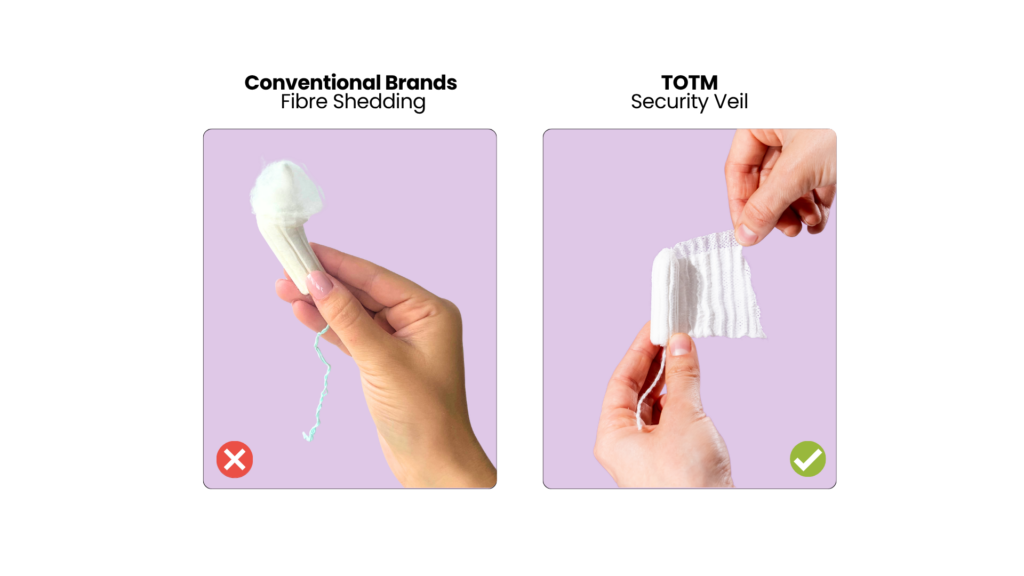
Fibre shedding occurs when the absorbent fibres of a tampon shed and remain inside of the vaginal canal after removal. The friction and movement of inserting and removing a tampon can cause some of its absorbent fibres to loosen and shed. And that means tiny fibres can potentially be left behind in the vaginal canal after removal.
As we know, the vagina is a self-cleaning organ, but it’s not able to flush out pieces of tampon left inside. And, here’s the wild part. Research from Middlesex University found that half of the 24 tampon brands tested contained plastics in direct contact with the vaginal wall, with some releasing an average of 9.4 billion nanoplastic fibres per tampon during use. Not exactly the kind of thing you’d want to leave behind.
The impact on vaginal health
Research into tampon fibre shedding has also raised questions about its potential impact on vaginal health. Dr Harry Baxter, Deputy Head of Research at Daye, has highlighted concerns that fibres left behind after tampon removal could create conditions that allow harmful bacteria to thrive, with potential implications for the vaginal microbiome and toxic shock syndrome (TSS).
Additionally, gynaecologist Dr Melanie Bone, a member of Daye’s Medical Advisory Board, has raised concerns that residual tampon fibres may retain menstrual blood and fluid that would otherwise be expelled during a period. This could potentially affect the vaginal microbiome, pH levels and the delicate balance of bacteria that help maintain vaginal health.
This is an important subject that most people aren’t made aware of. And at TOTM, we think that deserves a conversation. So we made one.
Our Natural Wonder advert puts tampon fibre shedding where it belongs: on the big screen. And as far as we know this is the first time tampon fibre shedding has been discussed in mainstream advertising. A long time well due.
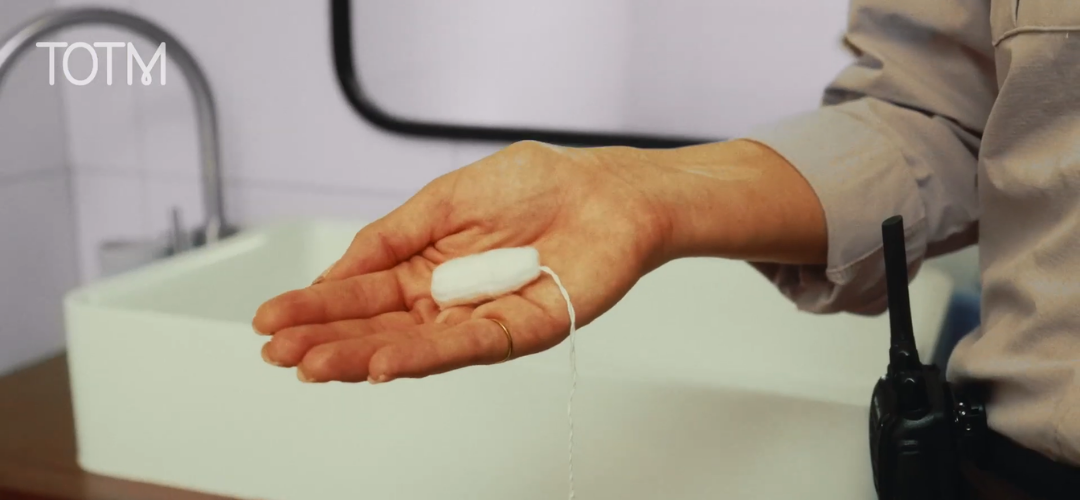
Enter the park ranger, exploring a vast ravine, who discovers a tiny piece of fibre fluff hidden amongst the bushes. It’s a metaphor for what can happen when conventional tampons are removed, with fibres potentially left behind inside the vagina. Because you wouldn’t leave litter or a trace in nature, so why should we accept it in our own bodies?
What is the solution?
Across all of our tampons at TOTM, they are wrapped tightly in an organic cotton security veil to protect and prevent fibres from shedding. It ensures that no fibres are left behind or shed inside the vaginal canal.
You can actually test if your tampons that you use shed fibres by either gently rubbing the surface of a tampon and you will see how easy little pieces of fluff will eventually end up coming up and falling away or you can place a tampon into a glass of water for a while and eventually you will see little white particles or pieces floating around in the water.
Our new TOTM Compact Applicator Tampons, with a patented Cottonlock™ 360° organic cotton security veil, designed to help lock fibres in place, combined with a smooth, bio-based compact applicator, this is our easiest and most comfortable tampon to insert yet.
So, what should you look for in a tampon?
Fibre shedding isn’t something most of us are taught to think about when choosing period care. But it raises an important question, what happens to your tampon during use and removal?
At TOTM, we believe the answer shouldn’t be something you have to wonder about.
Make sure to choose 100% GOTS certified organic cotton (which hi, hello 👋 our tampons are made with!). Plus, a security veil! All of our TOTM tampons are wrapped in a protective organic cotton security veil, designed to help prevent fibres from shedding.
Because you shouldn’t have to accept “that’s just how tampons are” as the answer.
You deserve to know what’s in your period care, how it’s made and what it’s designed to leave behind.
Nothing.
Ready to make the switch?


