



Your hormones can tell you a lot about what’s going on inside your body. And if something doesn’t feel right, you deserve to know why.
You might have heard that PCOS (polycystic ovary syndrome) is now also referred to as polyendocrine metabolic ovarian syndrome (PMOS) – a hormonal condition that can affect your periods, ovulation, skin, hair, fertility, metabolism and mood.
And while PMOS is common, getting a diagnosis isn’t always straightforward.
So let’s talk about the signs, what a PMOS diagnosis actually involves and, perhaps most importantly, how to advocate for yourself when something doesn’t feel right. 💜
What is PMOS?
PMOS, also known as Polyendocrine Metabolic Ovarian Syndrome, is a common condition that causes hormonal imbalance and affects how a woman’s ovaries work. It affects 1 in 10 women and around 70% of people with PMOS don’t actually realise that they have it.
PMOS is linked to hormone imbalances, particularly involving insulin levels.
Many women with PMOS are resistant to insulin, meaning their bodies don’t respond to insulin as effectively as they should. To compensate, the body produces extra insulin, which can then trigger higher levels of hormones like testosterone.
For adults, diagnosis is generally based on having at least two of three features, once other possible causes have been ruled out:
- Irregular or absent ovulation, often showing up as irregular or infrequent periods
- Higher androgen levels or signs of higher androgens, which can include excess facial or body hair, acne or hair thinning
- Polycystic ovaries, identified through an ultrasound
And an important reminder: having some of these symptoms doesn’t automatically mean you have PMOS. Lots of conditions can cause similar symptoms, which is why getting assessed matters.
PMOS symptoms: what should you look out for? 🤔
PMOS might not look the same for everyone. Some people have a lot of symptoms. Others have only one or two. Some people might not realise that the symptoms they’re experiencing could be connected at all.
Some common PMOS symptoms include:
PMOS is characterised by a combination of symptoms and these are unique to each person including:
Irregular periods or no periods at all – with PMOS, the ovaries don’t always release an egg each month. This can make periods unpredictable, very light, very heavy, or sometimes stop them altogether.
Hair thinning or hair loss – higher levels of certain hormones (androgens) can cause the hair on your head to become thinner, similar to male-pattern hair loss.
Oily skin or acne – hormone imbalances can make the skin produce more oil, which often leads to breakouts, especially on the face, chest, and back.
Excessive hair growth – extra androgens can also cause hair to grow in areas like the face, chest, stomach, or back.
Difficulty getting pregnant – irregular or absent ovulation (when an egg is released) makes it harder to conceive naturally.
Weight gain – many women with PMOS find they put on weight easily or struggle to lose it, often linked to insulin resistance.
The NHS recommends speaking to your GP if you think you might have PMOS or if your symptoms are affecting your everyday life, work or relationships.
How do you get a PMOS diagnosis?
There isn’t one single test that can diagnose PMOS.
Your GP will usually ask about your symptoms, menstrual cycle and medical history. They may arrange blood tests to check hormone levels and other markers, and an ultrasound may be used as part of the assessment.
Other conditions that could be causing similar symptoms may also need to be ruled out.
How to advocate for yourself at your GP appointment
Here’s something we want you to remember:
You don’t have to minimise your symptoms just because you’ve learned to live with them.
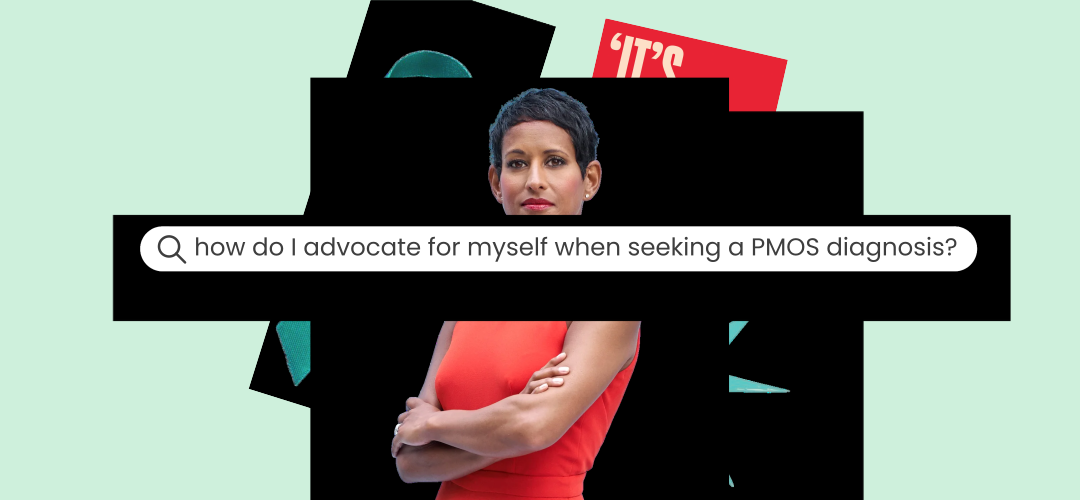
Naga Munchetty explores this in her book It’s Probably Nothing: Critical Conversations on the Women’s Health Crisis (and How to Thrive Despite It).
The book looks at women’s experiences of being dismissed, undiagnosed and misdiagnosed, and gives practical advice around advocating for yourself in healthcare.
When discussing GP appointments, Naga recommends preparing beforehand by writing down your concerns and, when it comes to menstrual health, tracking your symptoms.
And she has one sentence she particularly recommends using:
“This is negatively impacting the quality of my life.”
She says: “You cannot ignore that.”
It’s a powerful reminder that your healthcare professional needs to understand more than what you’re experiencing.
They need to understand the impact it’s having on you.
- Are you missing work because of your symptoms?
- Are you cancelling plans?
- Are you struggling to exercise?
- Are you constantly worried about when your next period will arrive?
- Are you exhausted?
- Are you planning your life around your cycle?
Before your appointment, write everything down 📝
When you’re sitting in a GP surgery, it can be surprisingly easy to forget half of what you wanted to say or you might feel apprehensive or nervous about getting your full point across.
So make a note beforehand! It can be super helpful to plan in advance what it is you want to say and feel free to take those notes with you and read them out to the GP if that helps too!
Keep track of your periods 🩸📅
There a many period tracking apps on the market that you can use to track your period such as Clue. You can note down when your period starts and ends, how long your cycles are, any changes to your usual pattern, how heavy your bleeding is, and any pain or symptoms.
Track other symptoms
Make a note of things like:
- Acne
- Hair growth or hair loss
- Changes in weight
- Fatigue
- Mood changes
- Pelvic pain
- Difficulty getting pregnant
Most importantly: track the impact
This is something that can easily be overlooked.
If your periods feel irregular, it can be helpful to think about how this is affecting you day to day — whether that’s worrying about when your next period might start or having to plan around the uncertainty.
And if you’re feeling tired all the time, try to describe what that actually looks like for you. For example, you might feel exhausted by the afternoon and find it difficult to concentrate at work.
These details can help you explain not just what you’re experiencing, but how it’s affecting your everyday life.
PMOS and your long-term health
PMOS isn’t just about periods.
Because it can affect hormones, ovulation and metabolism, having PMOS can be associated with other health considerations, including insulin resistance and an increased risk of type 2 diabetes and cardiovascular risk factors.
That’s another reason why getting the right diagnosis and ongoing support matters.
It’s about understanding what’s happening in your body so you can get the right support.
Always remember:
- You can ask questions.
- You can ask what tests are being considered.
- You can ask what else could be causing your symptoms.
- And if you’re still concerned, you can ask what the next step is.
That’s advocating for yourself.
Useful Links:
Verity UK – UK charity that raises awareness around PMOS.
PCOS Awareness Association – Organisation creating worldwide awareness of PMOS helping those get a diagnose, recieve the right information, and support.


