




At TOTM, over recent years, we have donated over £100k to Endometriosis UK and continue to fund and support their services whilst raising vital awareness.
What Is Endometriosis?
Endometriosis is a condition where cells similar to the ones lining the womb are found elsewhere in the body, usually within the pelvic cavity. Each month these cells react to the menstrual cycle in the same way to those in the womb, building up and then breaking down and bleeding. Unlike the cells in the womb that leave the body as a period, this blood has no way to escape. This leads to inflammation, pain, and the formation of scar tissue (adhesions).
Endometriosis affects 1 in 10 women and those assigned female at birth. Endometriosis is most active from puberty to menopause, although the impact can be felt for life.
What Are The Symptoms?
Endometriosis symptoms can vary in intensity from one person to another. Whilst for some they may not experience symptoms at all, for others it can be debilitating. Whilst not every person will suffer from every symptom, common symptoms include:
- Pelvic pain
- Painful periods that interfere with everyday life
- Heavy menstrual bleeding
- Pain during or after sex
- Painful bowel movements/when having a poo
- Pain when urinating/peeing
- Difficulty getting pregnant – up to 70% of those with endometriosis will be able to get pregnant naturally
- Fatigue, with one or more of the above symptoms
Many experience period pain, but if pain is interfering with your everyday life it’s best to see your doctor.
Endometriosis and Diagnosis
From the first GP visit, it takes an average of 9 years and 4 months to be diagnosed with endometriosis in the UK, rising to 10 years in Scotland. For a condition that is as common as diabetes, this is not okay. But why does the diagnosis process take so long? A few factors include:
- Dismissal of symptoms
- Minimisation of menstrual pain such as “it’s just period pain” comments
- Many are suggested to take the pill and live with it
- Symptoms overlap with normal periods or IBS and bowel problems.
If you think you might have endometriosis, it’s important to speak to your doctor. You can also visit Endometriosis UK’s website for helpful guidance on the diagnosis process and what to expect.
If you need support, please do reach out to Endometriosis UK’s support services. They have an online forum, helpline, and support groups across the UK – many of which are currently meeting online – so you can meet others with the condition and get support.
You can find out more about Endometriosis UK at www.endometriosis-uk.org
Becoming an Endometriosis Friendly Employer
Creating an endometriosis-friendly workplace is a meaningful way to support employees with Endometriosis. By improving awareness and addressing the challenges caused by misunderstanding or lack of knowledge, employers can foster a more inclusive and supportive environment.
Julie Burns, Endometriosis Friendly Employer Manager from Endometriosis UK, shares what your company can do to truly champion an Endometriosis supportive workplace:
💛 Hold regular team meetings focused on wellbeing, with space for anyone who wants to share.
💛 Reviewing policies including menstrual health support.
💛 Being flexible and accommodating towards staff.
💛 Offering short-term adjustments to working patterns (e.g. during treatment or hormonal changes).
💛 Showing empathy – it’s empowering for someone to feel heard and understood by their manager. “I hear you, I understand, let’s support you.”
💛 Implementing a gold-standard endometriosis policy.
💛 Creating an open and transparent workplace culture.
💛 Hosting awareness events and fundraising for Endometriosis UK.
💛Sign up to Endometriosis’ friendly employer scheme.
Who are Endometriosis UK?
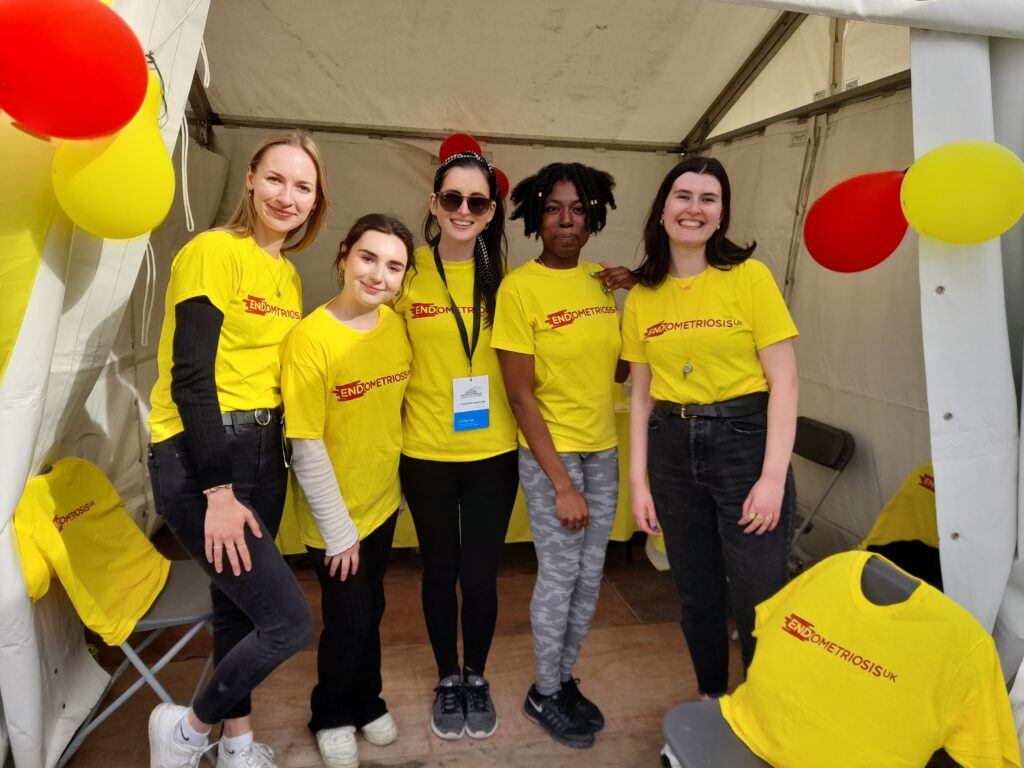
Endometriosis UK are the UK’s leading charity for all those affected by endometriosis, determined to ensure that everyone gets prompt diagnosis and the best treatment and support.
They work to break down barriers to access – whether information, treatment or support – wherever endometriosis impacts on lives. They are a powerful voice for those with endometriosis, driving up care standards across the UK.
Endometriosis UK provide vital support services, reliable information and a community for those affected by endometriosis.
Below are some useful tools and resources that may be helpful if you’re looking to continue the conversation around Endometriosis or want to make impactful changes within your organisation. 🙌
Introduction to Endometriosis Talk 💛
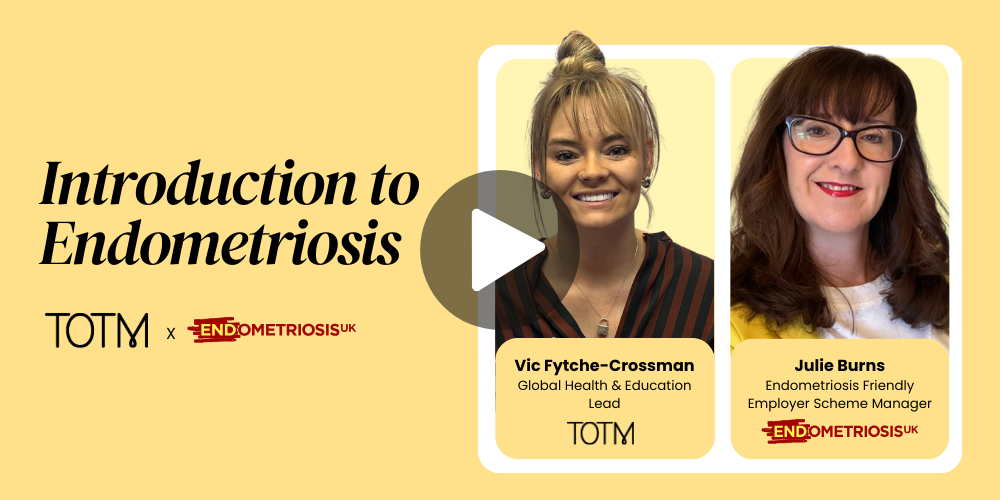
We hosted a live talk all about Endometriosis with Vic Fytche (Global Health and Education Lead from TOTM) and Julie Burns (Endometriosis Friendly Employer Manager from Endometriosis UK). If you’d like to revisit the session or share it with colleagues, you can click here to access the recording.
Menstrual & Menopausal Health Policy Template
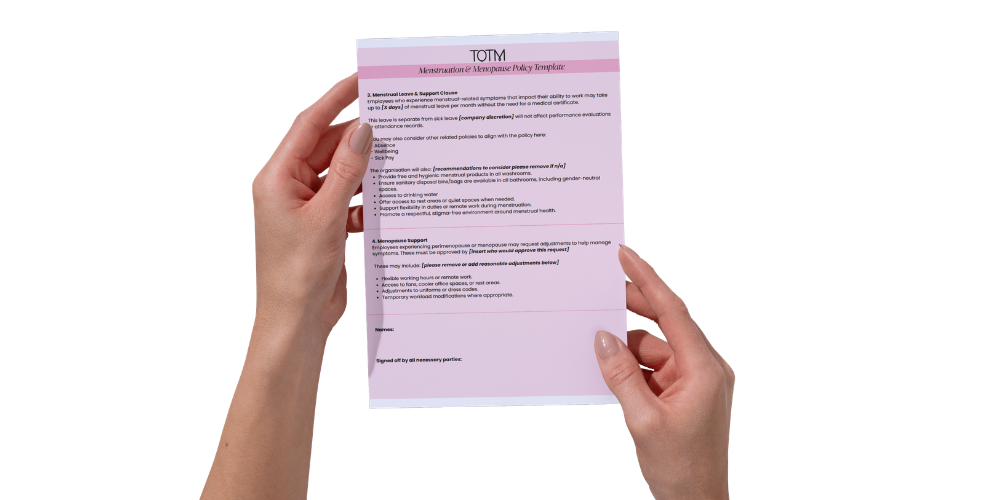
A draft policy designed to help organisations create a supportive framework around menstrual and menopausal health. You’re welcome to adapt this for use in your workplace.
TOTM CPD Accredited E-learning
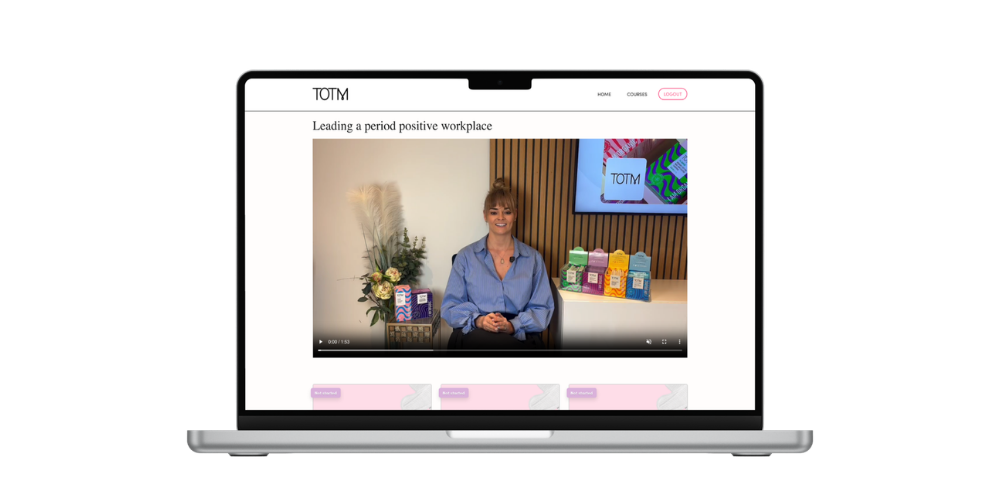
A practical way to build awareness within your organisation. This e-learning course supports managers and employees in recognising menstrual and menopausal health experiences, and fosters more informed, inclusive, and supportive workplace conversations.